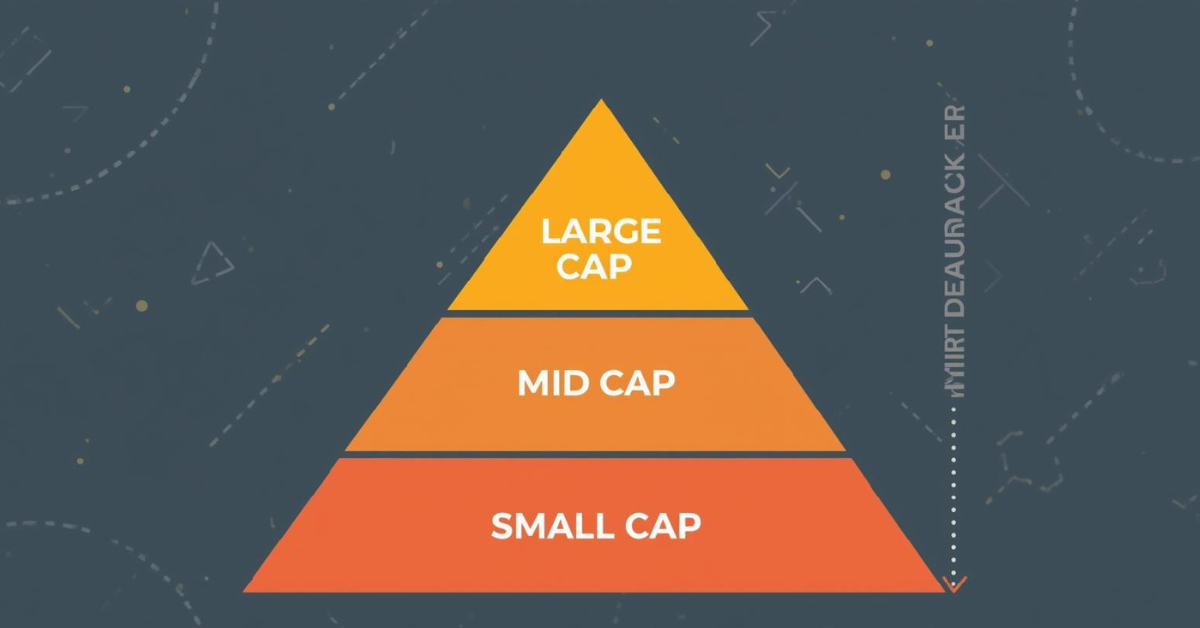

Market capitalisation, or market cap, is one of the most important ways to classify stocks in India. It helps investors understand a company’s size, stability, risk level, and growth potential. SEBI has defined clear categories for large cap, mid cap, and small cap stocks, and knowing the difference can help you make better investment decisions.
If you are new to the markets, you may first want to read our beginner’s guide to the Indian stock market.
What Is Market Capitalisation?
Market capitalisation is the total value of a company’s shares in the stock market. It is calculated as:
Market Cap = Share Price × Total Number of Shares
Based on SEBI guidelines, Indian companies are grouped into:
- Large Cap
- Mid Cap
- Small Cap
Large Cap Stocks
Large cap companies are the top 100 listed companies in India by market capitalisation.
- Highly stable and well-established businesses
- Lower volatility and steady performance
- Often industry leaders (e.g., Reliance, TCS, Infosys)
- Suitable for long-term, low-risk portfolios
Mid Cap Stocks
Mid cap companies rank from 101 to 250 in terms of market capitalisation.
- Balanced mix of growth and stability
- Moderate volatility and higher return potential
- Growing companies with expanding market presence
- Suitable for medium to long-term investors
Small Cap Stocks
Small cap companies rank 251 and beyond.
- High growth potential but also higher risk
- More volatile and sensitive to market conditions
- Often emerging businesses in early development stages
- Suitable for investors with high risk tolerance
Comparison Table: Large Cap vs Mid Cap vs Small Cap
| Category | Market Cap Rank | Risk Level | Return Potential | Volatility |
|---|---|---|---|---|
| Large Cap | 1–100 | Low | Moderate | Low |
| Mid Cap | 101–250 | Medium | High | Moderate |
| Small Cap | 251+ | High | Very High | High |
How to Choose the Right Category
1. Based on Risk Tolerance
- Low risk: Prefer large caps
- Medium risk: Mid caps
- High risk: Small caps
2. Based on Investment Horizon
- Short to medium term: Large caps
- Medium to long term: Mid caps
- Long term with patience: Small caps
3. Based on Portfolio Goals
- Stability and dividends → Large caps
- Growth + balance → Mid caps
- Aggressive wealth creation → Small caps
Why Market Cap Classification Matters
- Helps diversify your portfolio
- Controls overall risk exposure
- Helps match stocks with your investment objectives
- Allows better selection of mutual funds, ETFs, or smallcase portfolios
Mutual Funds and Market Cap Categories
- Large Cap Funds: Invest 80%+ in large cap stocks
- Mid Cap Funds: Invest 65%+ in mid cap stocks
- Small Cap Funds: Invest 65%+ in small cap stocks
- Multi Cap Funds: Invest across all categories
- Flexi Cap Funds: Fully flexible allocation
For diversification, you may also read our blog on how to build a diversified portfolio in India.
Common Mistakes Investors Make
1. Chasing Only High Returns
- Small caps offer high returns but also high volatility.
2. Underestimating Risk
- Always assess downside risks before investing.
3. Poor Diversification
- Do not invest only in one category; balance is key.
4. Ignoring Market Cycles
- Large, mid, and small caps perform differently during economic cycles.
Final Thoughts
Understanding large cap, mid cap, and small cap stocks helps investors make smarter decisions and build a balanced portfolio. Each category has its own advantages and risks, and the right mix depends on your goals, risk appetite, and investment horizon. A diversified approach ensures stability while capturing long-term growth opportunities.
SEBI Compliance and Legal Note
This article is for educational purposes only and is not financial advice.
Information is sourced from SEBI, NSE, and BSE.
For investor complaints, visit the SEBI SCORES platform.
Please consult a SEBI-registered financial advisor before investing.